This River is a Cradle | Solo Show | Canton Art Museum | 2025
This River is a Cradle

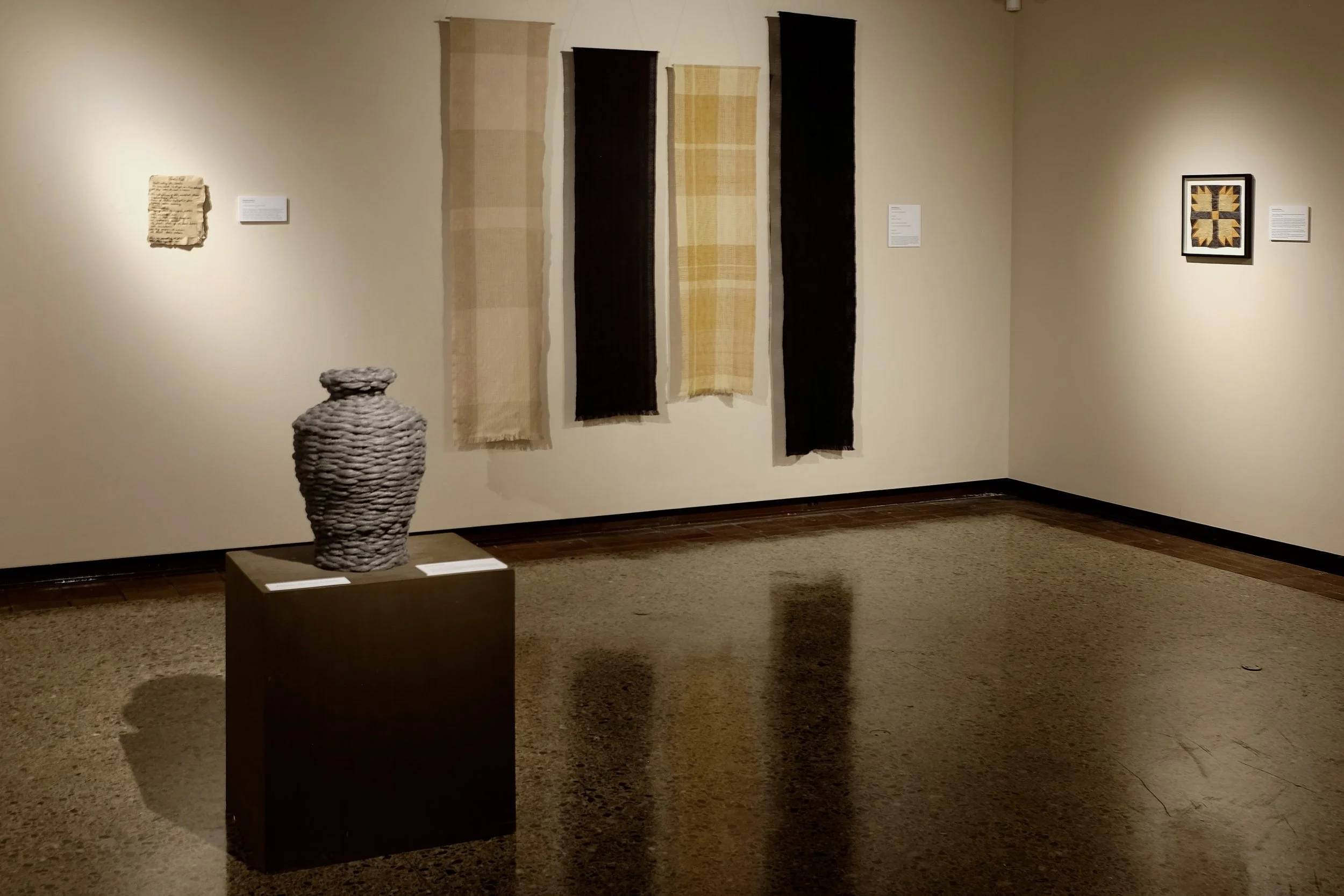
This body of work is an intimate portrayal of human relationship with the land. Rooted in the Northeast Ohio landscapes of Wentling’s childhood, these handwoven pieces and poems pull at the tensions of feeling connected to the ecology of a place while recognizing how the land and culture have been heavily marked by industrial capitalism. Sites like the Cuyahoga River, woods on the W&LE Railroad property, and Sugar Creek appear through memory and material.

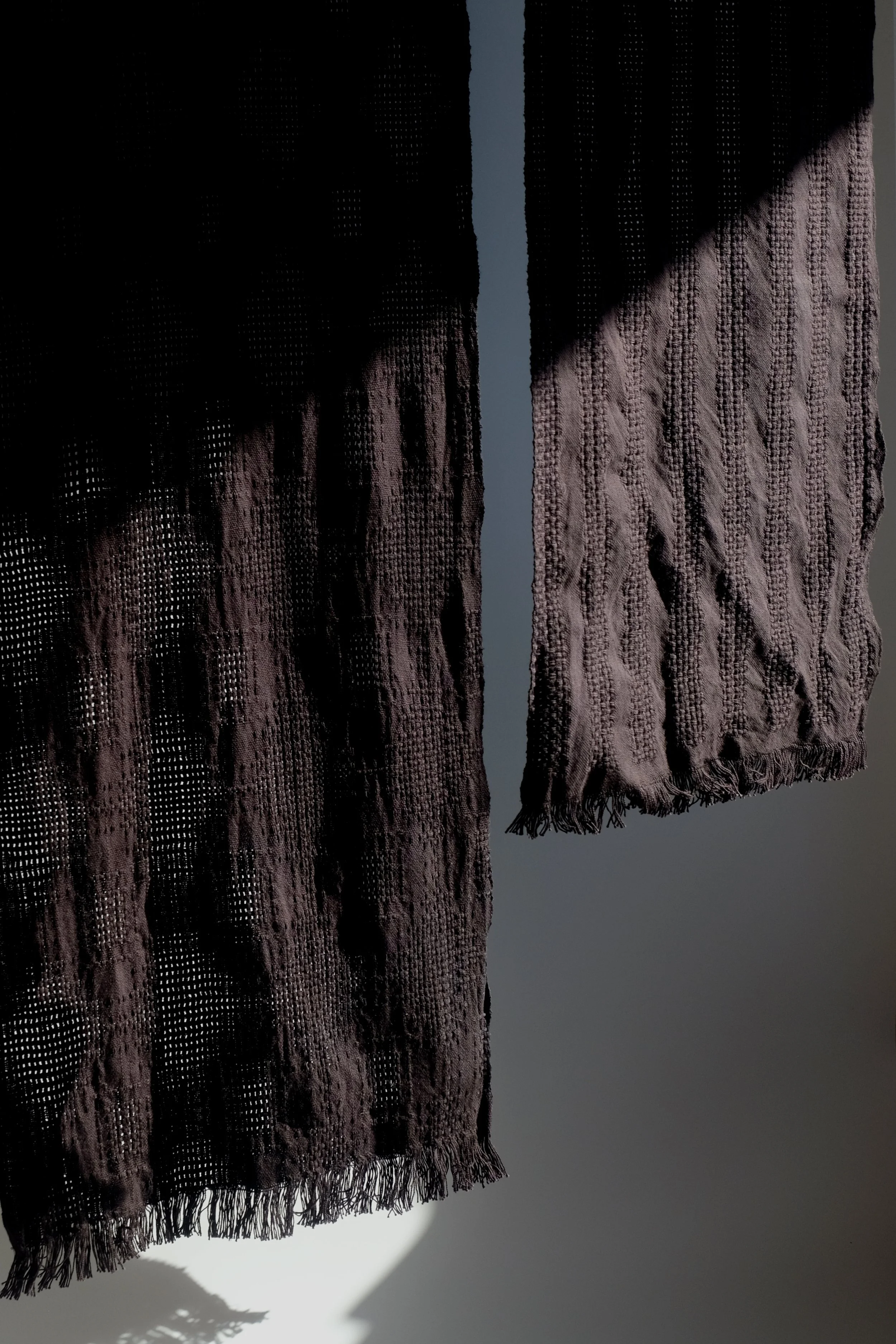
Through processes of handweaving, botanical dyeing, and papermaking, Wentling conjures craft traditions that diminished during the rise of industrialization. Using yarns dyed with both native plants and pollutants, woven pieces represent a material history of the region. They carry reminders of fire, oil, and steel—memories of humans’ past relationships with the land. They also gesture toward the possibility of repair, of reconnecting with places once sacrificed or neglected.

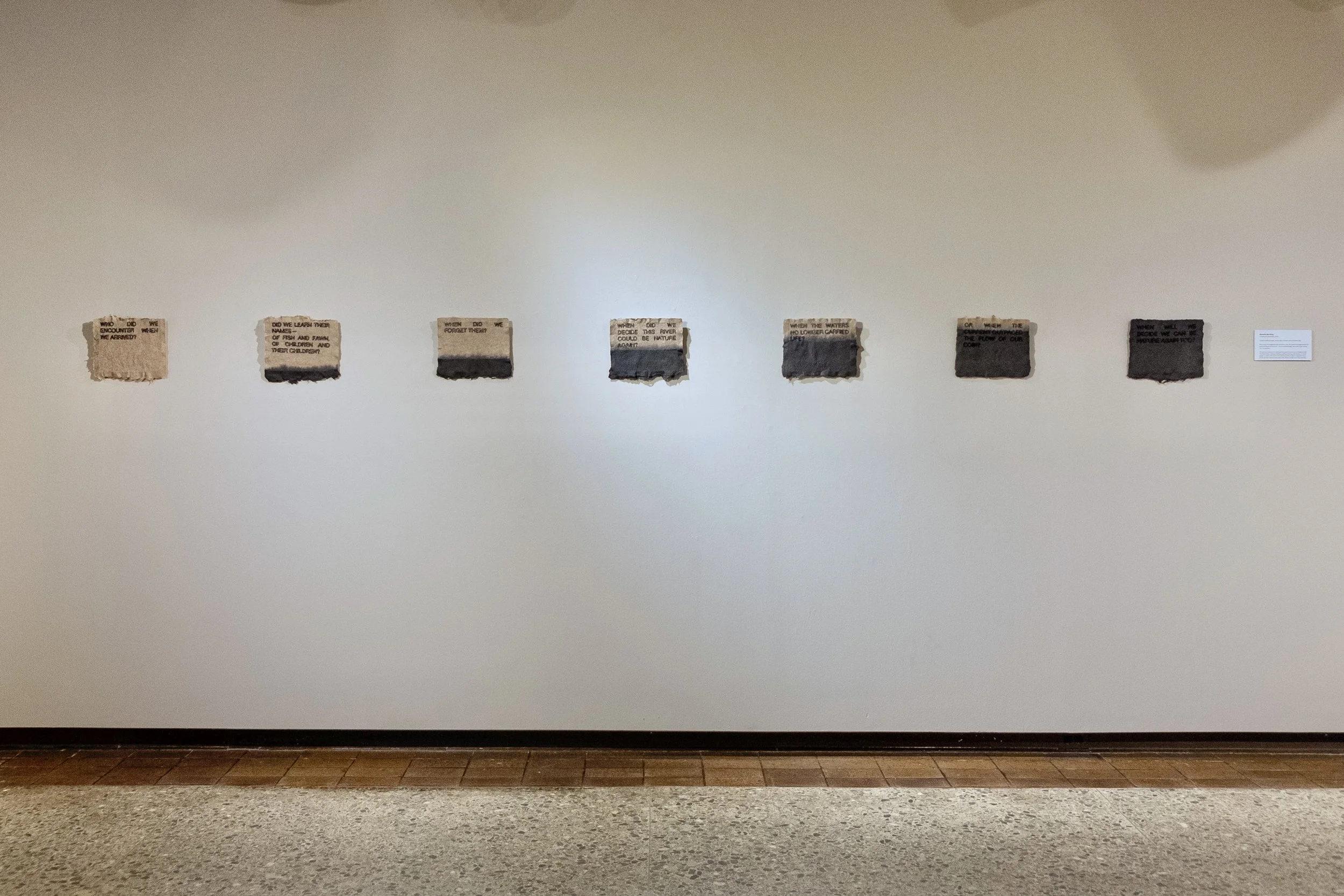
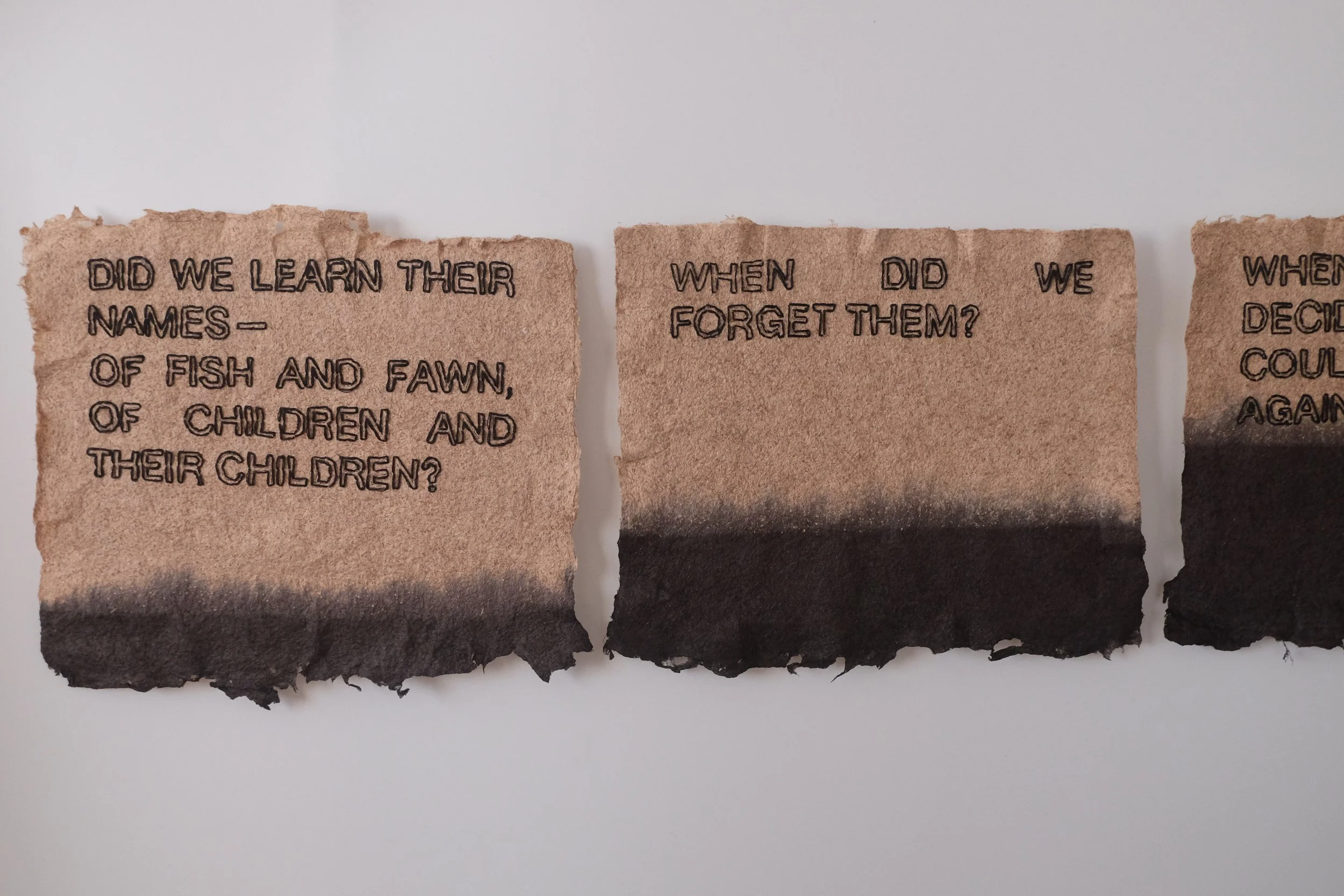
A Series of Questions

Cattail seedhead paper, embroidery thread, and acid-based dye

2025 

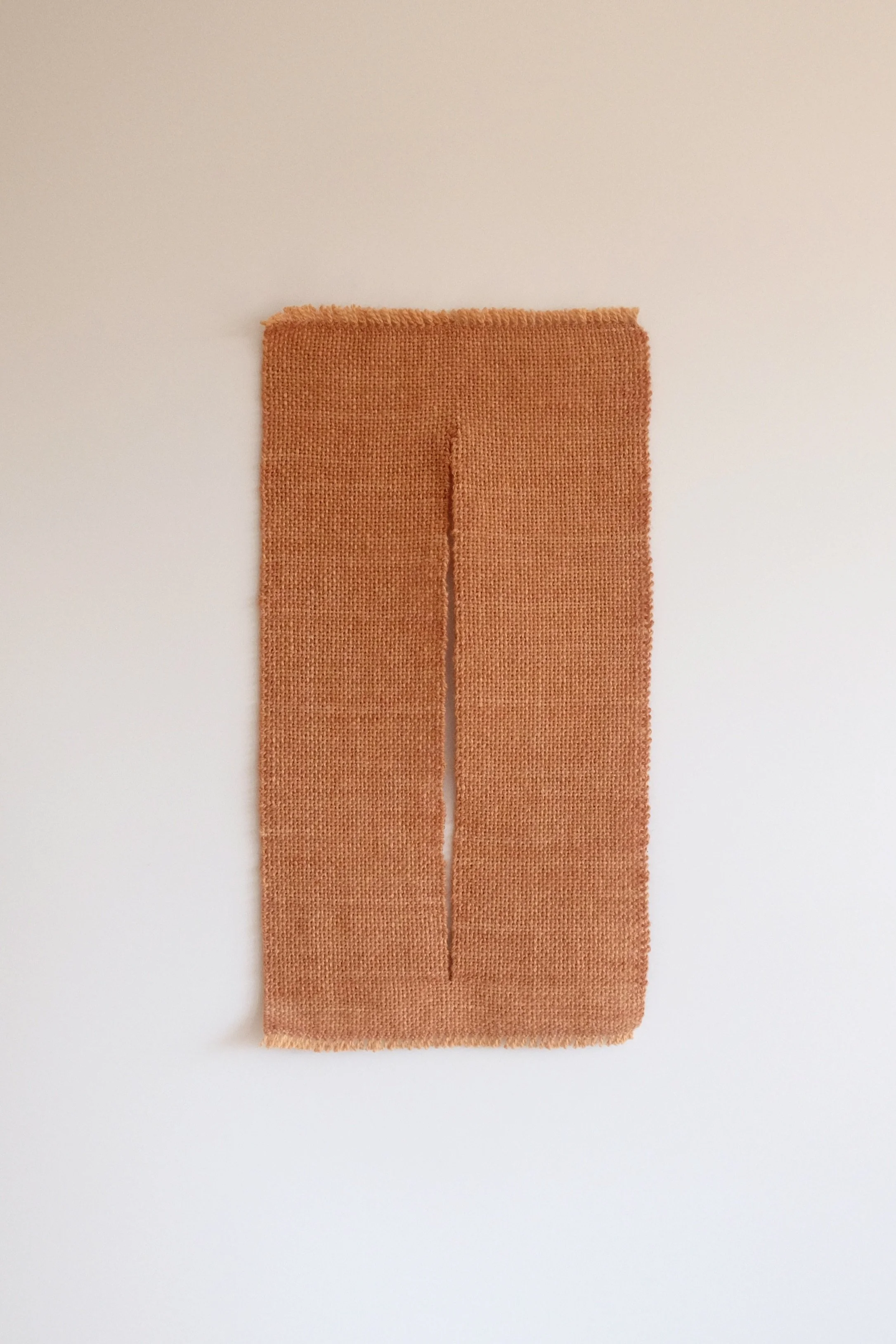
Absence/Opening

Wool and pokeweed berry dye

2024

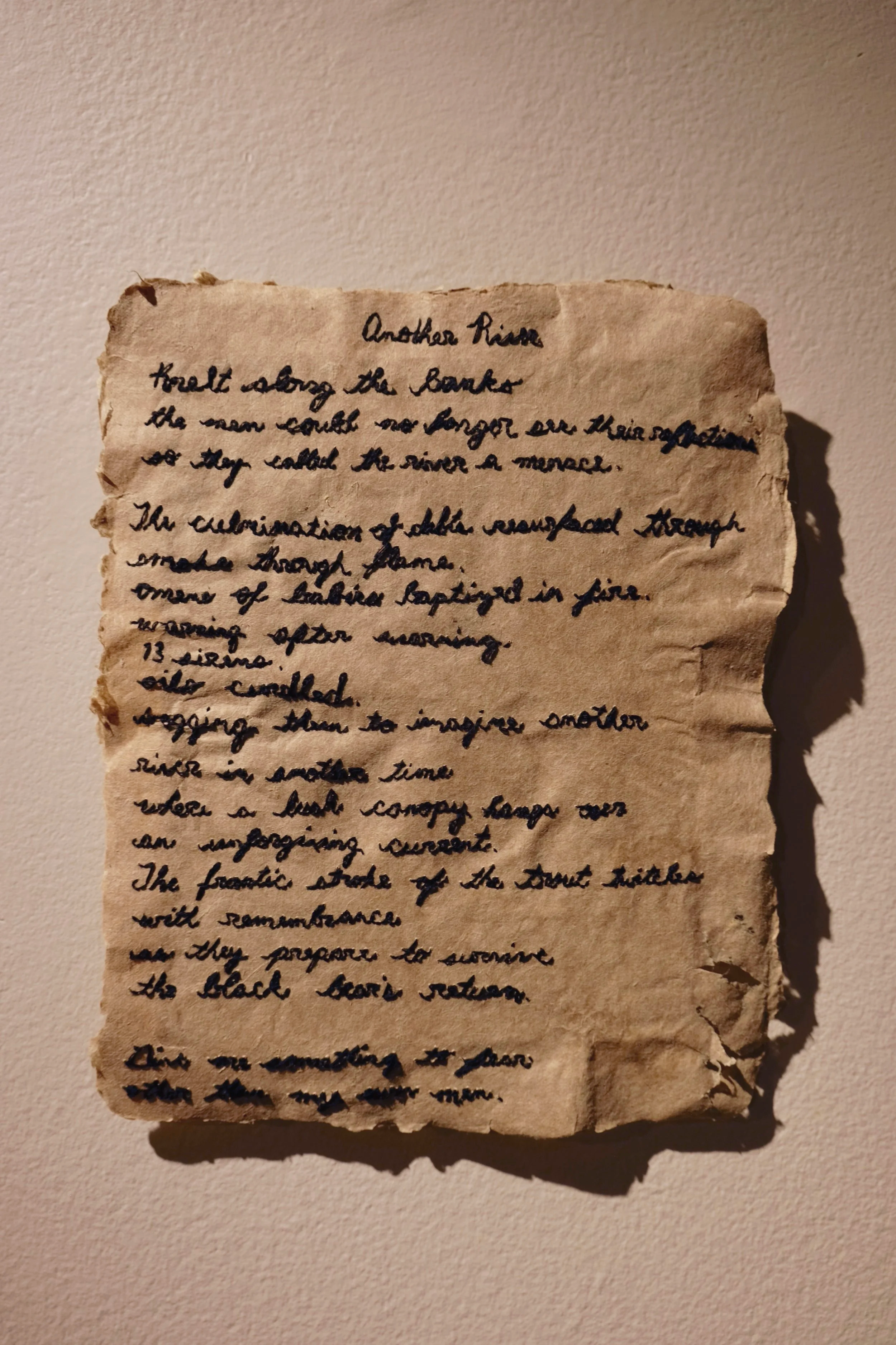
Another River

Cattail leaf paper and embroidery thread

2025

 Using an ecofeminist lens to examine the harm done to the land, this poem imagines, then demands, an alternative to the current configuration of power that justifies abuse toward the land as well as the many beings who inhabit it. The poem is not written but hand-embroidered, a craft traditionally gendered as feminine in the US. Each letter is created by puncturing a series of holes through the cattail paper using a steel-wire embroidery needle, embedding the piece with rage, care, fear, and hope.

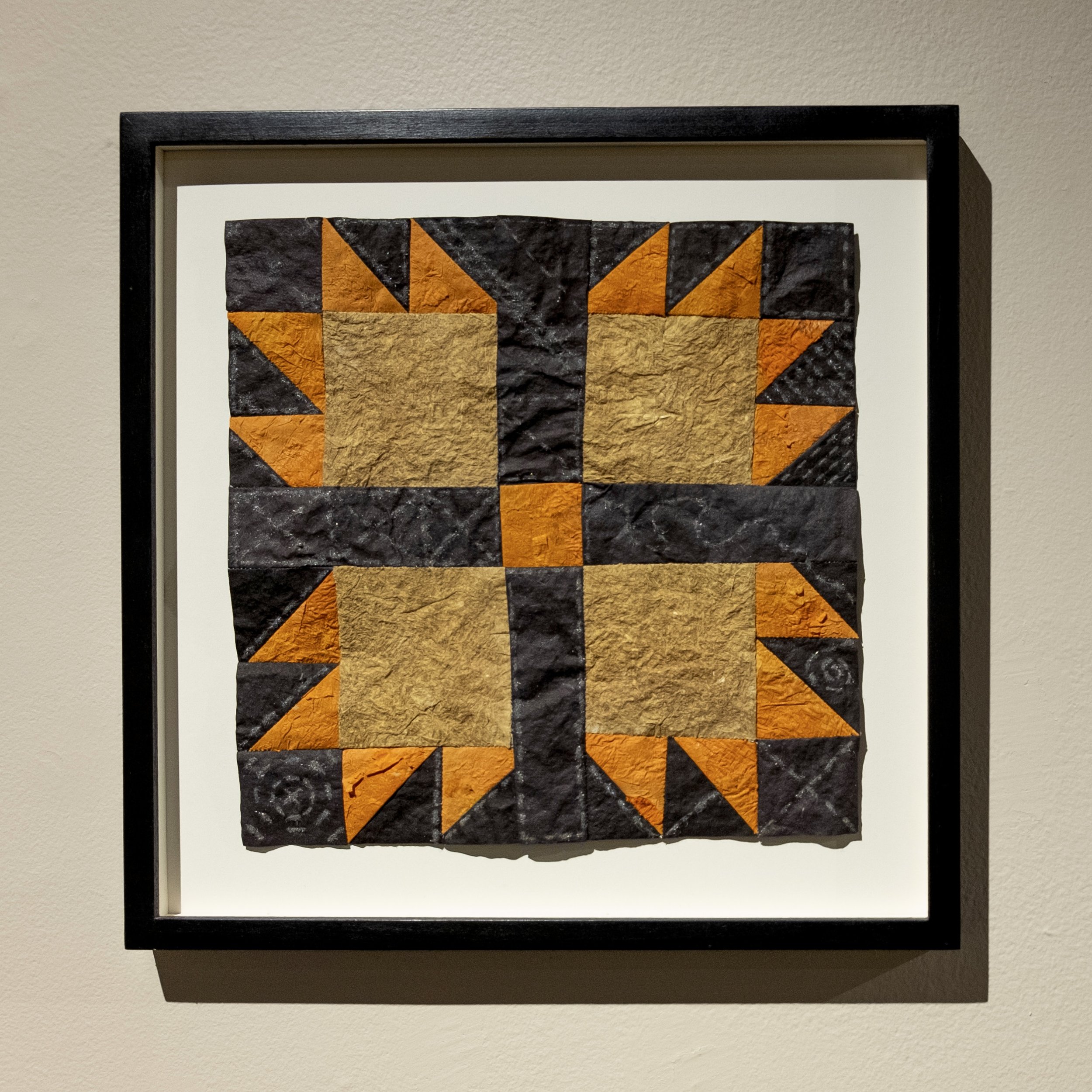
Black Bear’s Return

Cattail leaf paper, iris leaf paper, Osage orange root bark, acid dye, cotton thread, glue, steel wool

2025

 Due to habitat loss and unregulated hunting practices, the black bear was extirpated from the Ohio region in the 1850s. Using handmade paper derived from native plants, this paper block reconfigures the Bear’s Paw quilt pattern, infusing introduced chemicals and metals into the block. Steel wool dust sits in place of a traditional hand stitch. Dark black acid dye seeps into cattail paper. Still, vibrant orange and golden plant tones remain.

The Bear’s Paw is also believed to have been used as a code for enslaved people navigating the Underground Railroad. A quilt featuring the pattern might have been draped over a fence or windowsill, signaling the reader to follow a mountain trail, out of view, and then follow an actual bear’s trail to water and food. The square remains a symbol of hope and possibility today.

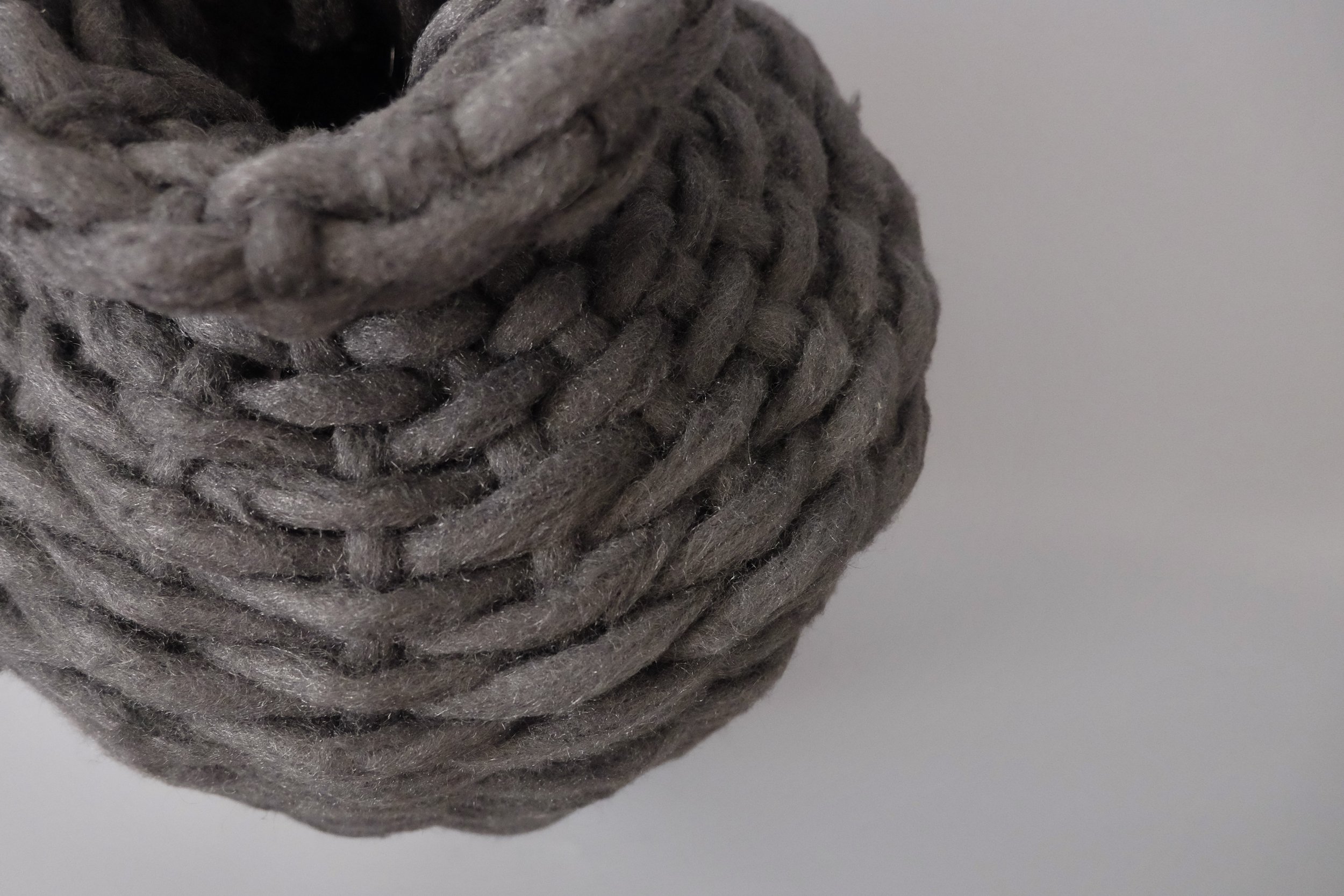
Steel Offering

Steel wool and steel strapping

2025

This vessel appears soft from afar, but upon closer inspection, the shiny, sharp hairs of steel wool make themselves visible. While spinning steel wool into yarn-like strands, the artist quickly acquired micro-splinters of steel in her hands: a physical reminder of the harm done not only to the land but also to the bodies of mill workers.

Previous
Previous

Superfund Quilts

Next
Next

Cycles of a Shore